
When Your Body Finally Says No: What Burnout Really Looks Like Before the Breakdown
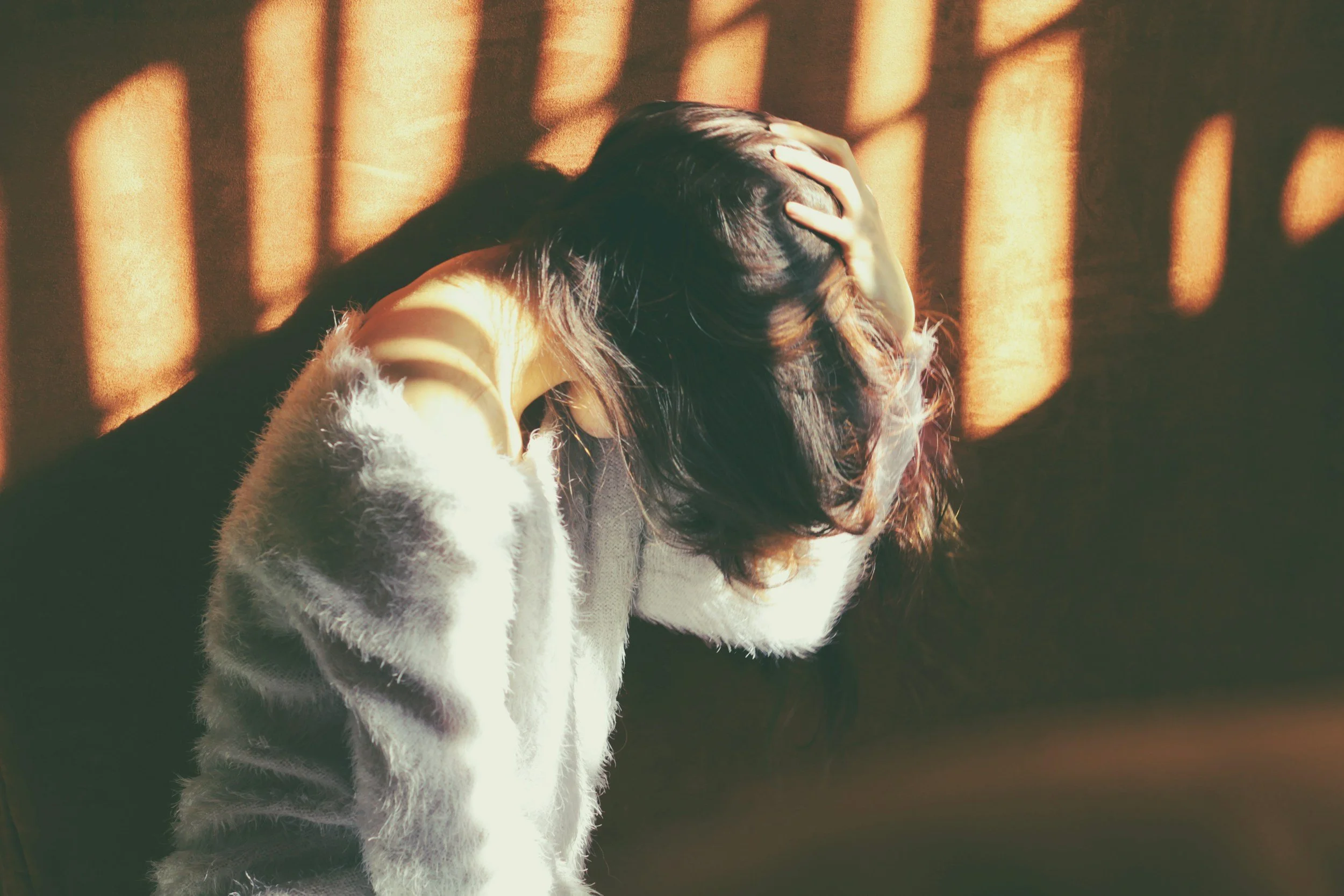
“I didn’t stop.
My body made me.”
"I didn't stop.
My body made me."
There is a version of burnout that gets told very neatly.
Someone works too hard. They become overwhelmed. They realise something has to change. They slow down, learn an important lesson, and life becomes softer on the other side.
I understand why we tell the story that way.
It gives suffering a beginning, a middle and an end.
But that wasn't my experience.
Before there was clarity, there was confusion.
Before there was healing, there was fear.
Before I understood what my body had been trying to tell me, I spent months wondering if my life had simply fallen apart.
This is that part of the story.
Not because I want to revisit it.
Because I think too many women arrive here believing they're the only ones.
If you're new to Blooming, you may want to begin with my story first. This essay is about what happened when my body finally reached a limit I didn't know existed.
Looking Back, My Body Had Been Speaking for Years
The strange thing about burnout is that it rarely arrives without warning.
Looking back now, I can see the signs everywhere.
The exhaustion I explained away.
The tension I learned to ignore.
The constant feeling of rushing from one responsibility to the next.
I thought I was simply doing what capable women do.
Keeping everything moving.
Holding everything together.
Being grateful for the life I'd built.
If I'm honest, I wore that capability almost like a badge of honour.
I believed pushing through was resilience.
I believed resting was something I'd do later.
When work settled down.
When life became less demanding.
When everyone else needed me a little less.
But later has a way of quietly becoming years.
And while I kept convincing myself I was coping, my body had already begun telling a different story.
I just wasn't listening.
The Day Everything Changed
It began with vertigo.
Not the kind where the room spins for a few seconds before settling again.
This was different.
Imagine being trapped on a ride that won't stop—except the ride is your own body.
The world lurched violently around me.
I couldn't find stillness because stillness no longer existed.
Then came the vomiting.
Then the days afterwards, when I felt as though I'd survived the worst hangover imaginable despite never touching a drink.
Weak.
Fragile.
Completely exhausted.
I assumed it was a strange, isolated episode.
Then it happened again.
And again.
Eventually I was diagnosed with vestibular migraines.
Later came hyperacusis—a condition that made ordinary sounds physically painful.
A cupboard closing.
Cutlery touching a plate.
Running water.
Even laughter.
The ordinary soundtrack of family life suddenly became something my nervous system couldn't tolerate.
What hurt most wasn't the diagnosis.
It was what the diagnosis took from me.
The Hardest Part Wasn't Being Sick
It was being a mother who couldn't always be there.
There were days I couldn't get out of bed.
Not because I didn't want to.
Because my body simply wouldn't let me.
I missed dance concerts.
School events.
Halloween celebrations.
Ordinary afternoons that never feel important until you realise you're not there to experience them.
My husband, family and friends carried us through that season with extraordinary generosity.
They stepped into the spaces I physically couldn't.
School drop-offs.
Meals.
Sport.
The endless practical things that keep a family moving.
I'll never stop being grateful for that.
But there was one thing no one else could carry.
The guilt.
I had built so much of my life around being present for my children.
I'd shaped careers, opportunities and decisions around that value.
And suddenly, despite wanting to be there more than anything, I couldn't.
For a long time I believed that was my greatest failure.
Looking back now, I see something different.
I had spent years being present for everyone else's lives.
But I hadn't been particularly present in my own.
Looking for Answers
Like so many people faced with something they don't understand, my first instinct was to solve it.
I booked appointments.
I researched obsessively.
I saw specialist after specialist.
ENTs.
Audiologists.
Neurologists.
Test after test.
Scan after scan.
Eventually, I had a diagnosis.
It explained what was happening.
It didn't explain why.
That question stayed with me much longer.
Why now?
Why had my body suddenly stopped cooperating after decades of managing everything?
At the time, I thought I was looking for a medical answer.
Looking back, I think I was asking a much bigger question.
What It Took Me Years to Understand
This is the part that's hardest to write.
Not because of the illness itself.
Because of what it revealed.
For years, I had built my life around being present for the people I loved.
I made career decisions with my family in mind.
I organised my days around everyone else's needs.
I believed I was doing what a good mother, wife and professional should do.
And I don't regret that.
Not for a second.
But somewhere along the way, I'd quietly begun believing that looking after myself could always wait.
There would be time later.
After this deadline.
After the school holidays.
After things settled down.
Except life has a way of filling every space you leave available.
Later kept moving.
And I kept moving with it.
Until my body couldn't.
The Container
I've thought about this a lot since then.
The best way I can describe it is this.
I had become the container that held everyone else's lives.
Appointments.
School lunches.
Work.
Responsibilities.
The emotional weight of being the dependable one.
I held everything.
And because I was still standing, everyone—including me—assumed the container was fine.
But containers have limits.
Bodies have limits.
Nervous systems have limits.
Mine reached them.
Looking back, I don't think it happened in a single moment.
It happened every time I ignored my exhaustion.
Every time I pushed through instead of pausing.
Every time I convinced myself that caring for myself could wait until everyone else was okay.
The breakdown didn't begin the day I became ill.
It began years earlier.
I just didn't recognise it yet.
Learning to Listen
For a long time, I thought my body had betrayed me.
It had taken away my independence.
My confidence.
The life I'd worked so hard to build.
But slowly, my perspective began to change.
What if my body wasn't betraying me?
What if it was doing the only thing left it could do?
What if all the whispers I'd ignored had finally become too loud to silence?
The exhaustion.
The tension.
The overwhelm.
The constant feeling that I was carrying more than I could comfortably hold.
My body had been speaking for years.
I simply hadn't learned its language.
And perhaps that is what so many of us do.
We celebrate endurance.
We admire resilience.
We congratulate ourselves for pushing through.
Until one day, pushing through is no longer an option.
Not because we've failed.
Because our bodies were never designed to carry endless weight without being cared for too.
What Helped Me Begin Again
People sometimes ask me what finally helped.
I wish I could point to one treatment.
One appointment.
One breakthrough that changed everything.
But healing didn't happen like that.
It happened quietly.
In small moments.
In conversations where I stopped pretending I was fine.
In therapy, where I finally admitted how exhausted I really was.
In learning that being capable and being well are not the same thing.
In paying attention to the signals I had spent years overriding.
Hungry.
Keep going.
Tired.
Push through.
Overwhelmed.
You'll be fine.
Sad.
Other people have it worse.
Little by little, I had taught myself that my needs could always wait.
Recovery began when I stopped believing that.
Not because my life suddenly became easier.
Because I finally stopped treating my wellbeing as something I had to earn.
I started resting before I reached breaking point.
I started saying no without explaining myself.
I started paying attention to what gave me energy instead of only what demanded it.
None of these changes were dramatic.
But together they began creating a different kind of life.
One where I no longer had to abandon myself just to keep everything else running.
Looking Back
If you've read this far, perhaps some part of this story feels familiar.
Maybe your body hasn't stopped you.
Maybe it hasn't needed to.
Maybe it's still whispering.
Through exhaustion.
Through anxiety.
Through the feeling that you're constantly rushing, even when there's nowhere important to be.
Through the quiet thought that you've been holding everything together for so long that you've forgotten what it feels like to simply be held yourself.
If that's where you are, I want you to know something.
You haven't failed.
Your body isn't working against you.
It may simply be asking for something you've been too busy to hear.
Looking back, I don't think my body was trying to destroy the life I'd built.
I think it was trying to stop me from continuing to live it in a way that was slowly destroying me.
That doesn't mean I'm grateful for everything that happened.
I wouldn't wish that season on anyone.
But I am grateful for what it taught me.
It taught me that a meaningful life isn't measured by how much we can carry.
It's measured by whether there's still room for us within it.
And perhaps that's the question this experience left me with.
Not...
"How much more can I keep carrying?"
But...
"What kind of life am I creating?"
Because I don't believe our bodies are asking us to become someone new.
I think they're asking us to come home to the person we've been too busy to notice.
One small choice at a time.
With love,
Olga
Begin Your Return
If this story resonated with you, I created The Return as a gentle place to begin.
Five thoughtful days.
Simple reflections.
Guided meditations.
Small daily practices.
Not to overhaul your life.
Simply to help you slow down long enough to hear yourself again.
Because meaningful lives aren't found.
They're created.
One intentional choice at a time.
If You're Ready to Go Deeper
If this essay stirred something in you, the Blooming Prompt Journal is where the conversation continues.
It's a year of thoughtful questions, gentle reflections and small invitations to pay closer attention to the life you're creating.
Not because you need to become someone new.
Because the life that feels most like yours is built one intentional choice at a time.
One page.
One week.
One honest conversation with yourself.
Things I Keep Coming Back To
If you're curious about the books, skincare, home rituals and everyday things I genuinely use and love, I've gathered them all in one place.
They're not essentials.
Just small things that have quietly earned a place in my life and make ordinary days feel a little calmer, a little more intentional, and a little more like mine.
