
Why Your Skin Changes in Your 40s. What Nobody Told You (And What Actually Helps)
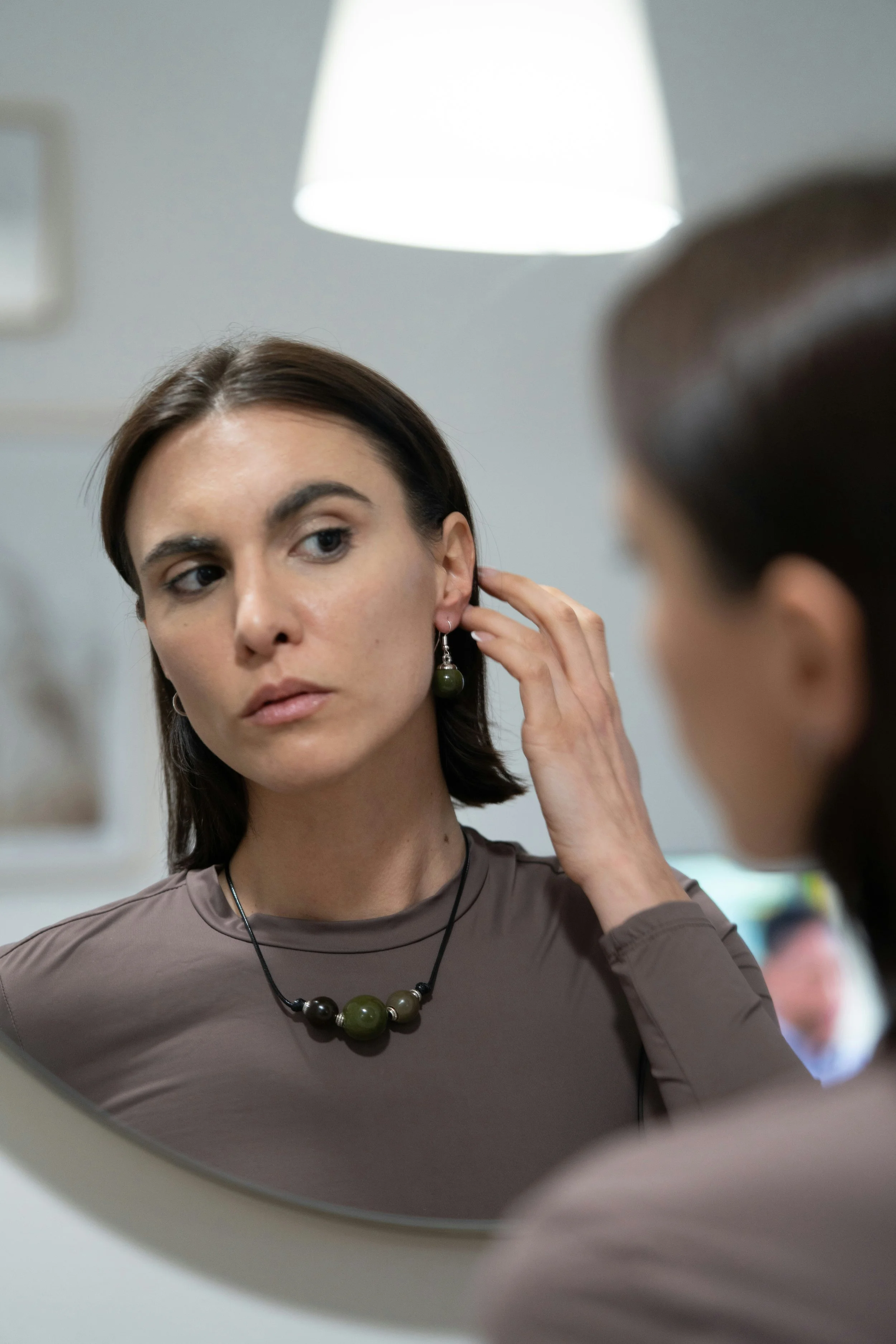
I was not looking for younger skin. I was looking for skin that felt like mine again. Present, alive, comfortable. That is what changed.
Nobody told me.
Not my mother.
Not my GP.
Not the women I worked alongside for more than twenty years.
Not even the beauty industry, which has spent decades selling women products labelled anti-ageing while quietly failing to explain why the products that once worked had suddenly stopped.
I discovered what was happening to my skin the way I suspect many women do.
Alone.
Standing in my bathroom.
Looking at a face that had always been mine and feeling, quietly and without drama, like something had changed.
Not because I suddenly looked older.
Because my skin no longer felt familiar.
The moisturiser I'd relied on for years wasn't enough anymore.
My skin felt tighter.
Drier.
Less comfortable.
Less radiant.
It reacted to products it had always tolerated.
I found myself buying richer creams, layering more serums, searching for the next recommendation, convinced I simply hadn't found the right product yet.
Looking back, I wasn't buying skincare.
I was buying explanations.
And nobody seemed to have one.
The Conversation We Never Had
One of the things that has surprised me most about entering my forties is how little we talk about what actually happens to women's bodies.
We speak about wrinkles.
We joke about hot flushes.
We tell women to expect change.
But very few people explain what those changes actually are.
Or why they're happening.
Or how to respond in a way that makes sense.
Instead, we're often left believing our bodies are somehow failing us.
As though we're doing something wrong.
As though if we just found the right cream, the right serum or the right treatment, everything would go back to the way it was before.
I don't believe that's the problem.
I think the problem is that we've been given products instead of understanding.
And understanding changes everything.
Your Skin Hasn't Failed You
One of the biggest shifts for me came when I stopped asking,
"What's wrong with my skin?"
...and started asking,
"What is my skin trying to tell me?"
Because your skin isn't separate from the rest of your body.
It's responding to what's happening inside it.
And for many women, one of the biggest changes begins long before we expect it.
Perimenopause.
For some women it begins in their late thirties.
For others, their early forties.
Often years before periods become irregular.
Years before many of us even realise hormones are changing.
And because those changes happen gradually, it's easy to believe the problem is simply that we're getting older.
It isn't that simple.
What's Actually Happening
Oestrogen isn't only a reproductive hormone.
It's also one of the hormones that helps keep skin healthy.
It supports collagen production, helping skin maintain its strength and structure.
It encourages the production of hyaluronic acid, which keeps skin hydrated and resilient.
It helps maintain the skin barrier—the protective layer responsible for keeping moisture in and irritants out.
It even contributes to that quality we often describe as radiance.
Not youth.
Radiance.
The healthy, comfortable glow that comes from skin functioning well.
As oestrogen gradually declines during perimenopause, those systems begin to change.
Collagen production slows.
The skin barrier becomes less resilient.
Moisture escapes more easily.
Skin becomes drier, thinner and often more reactive.
Suddenly, products you've loved for years don't seem to work the way they once did.
Not because they're bad products.
Because your skin is asking for something different.
And once I understood that, everything about the way I cared for my skin began to change.
Why Your Moisturiser Suddenly Stopped Working
This was the part nobody explained to me.
Like many women, my first instinct was to buy richer moisturisers.
If my skin felt dry, I assumed it simply needed more moisture.
Sometimes they helped.
For an hour.
By lunchtime my skin felt tight again.
By evening it felt like I'd applied nothing at all.
I thought I hadn't found the right product.
The truth was simpler than that.
I was trying to solve a different problem.
Most moisturisers are designed to hydrate the surface of the skin.
They draw water into the upper layers and help slow its evaporation.
They're excellent at what they're designed to do.
But during perimenopause, the biggest change isn't simply that your skin has become drier.
It's that your skin barrier has become weaker.
Think of your skin barrier as the protective wall that keeps moisture in and everything else out.
When oestrogen begins to decline, that wall slowly becomes less resilient.
Moisture escapes more easily.
The skin becomes more sensitive.
Products that once felt wonderful can suddenly sting.
Your skin isn't simply thirsty.
It's struggling to hold on to what you're giving it.
Understanding that changed everything for me.
Because once I stopped trying to flood my skin with more hydration...
I started asking how I could better support the barrier itself.
The Difference Oils Made
This is where face oils finally made sense.
Not because they're fashionable.
Not because they're luxurious.
Because they work differently.
A well-formulated facial oil helps replenish the lipids that your skin barrier naturally relies on.
Instead of sitting on the surface, the right combination of oils helps support the very layer that's changing during perimenopause.
For the first time in years, my skin didn't just feel moisturised.
It felt comfortable.
Comfort became the word I kept coming back to.
Not tighter.
Not shinier.
Not younger.
Comfortable.
Like my skin had stopped asking for something it wasn't receiving.
That was the difference.
The Ingredients That Finally Made Sense
Once I understood what my skin was actually asking for, I stopped chasing trends and started paying attention to ingredients.
A few continued appearing in the research.
Not because they promised miracles.
Because they addressed the specific changes happening in perimenopausal skin.
Rosehip Seed Oil
Rich in essential fatty acids and naturally occurring vitamin A compounds, rosehip supports skin renewal while helping improve the appearance of texture and tone.
Squalane
One of my favourite ingredients.
Squalane closely resembles the skin's own natural oils, making it incredibly well tolerated.
It helps reinforce the skin barrier without feeling heavy or greasy, making it ideal for skin that's become dry or reactive.
Sea Buckthorn
Sea buckthorn is rich in carotenoids and antioxidants that support healthy-looking skin and help restore the kind of natural radiance many women feel they've lost.
Not sparkle.
Not glow for Instagram.
Healthy, comfortable skin that looks alive.
Bakuchiol
Bakuchiol has become one of the most interesting ingredients in modern skincare.
Often described as a gentler alternative to retinol, research suggests it can help improve the appearance of fine lines and uneven skin tone while being much kinder to sensitive skin.
For women whose skin has become more reactive during perimenopause, that gentleness matters.
What I Was Really Looking For
Looking back, I wasn't searching for younger skin.
I wasn't trying to look twenty-five again.
I simply wanted my skin to feel like mine.
Comfortable.
Healthy.
Supported.
There's a quiet confidence that comes from skin that feels well cared for.
Not perfect.
Just well tended.
And I realised that's what I'd been missing all along.
Not youth.
Comfort.
Not perfection.
Understanding.
The Part That Changed More Than My Skin
Something unexpected happened when I started using a face oil.
It wasn't just that my skin felt different.
I felt different.
Each evening, I'd warm a few drops between my hands, press them gently into my face, and for perhaps the first time all day, I would stop.
Not for long.
A minute or two at most.
But those two minutes became something I hadn't realised I'd been missing.
Attention.
Not the hurried kind that exists only to complete another task.
The quiet kind.
The kind that says,
"I'm here."
For years, I had treated skincare like another job to get through.
Cleanse.
Moisturise.
Move on.
It lived on the same list as answering emails, packing lunches and folding washing.
Necessary.
Efficient.
Forgettable.
Somewhere along the way, I'd stopped caring for myself and started maintaining myself.
Those are not the same thing.
Maintenance keeps something functioning.
Care asks what it needs.
I think many women know this feeling.
We become incredibly good at maintaining our lives.
Our homes.
Our families.
Our careers.
Sometimes even ourselves.
But maintenance isn't the same as tending.
Tending requires presence.
It asks us to slow down long enough to notice.
The ingredients in my skincare mattered.
They genuinely helped my skin become healthier, calmer and more resilient.
But I don't think the ingredients were the whole story.
The ritual mattered too.
Those few quiet moments each evening became a small reminder that I wasn't simply someone who cared for everyone else.
I was someone worth caring for too.
Looking back, I don't think I was only repairing my skin barrier.
I was repairing something in my relationship with myself.
What I Wish Someone Had Told Me
If I could go back and speak to the woman standing in her bathroom wondering why nothing seemed to work anymore, this is what I would tell her.
Your skin hasn't failed you.
Your body is changing exactly as bodies do.
You don't need to fight it.
You don't need to panic.
And you certainly don't need to believe you've somehow done this wrong.
You simply need different information.
Different ingredients.
And perhaps a different relationship with your own reflection.
Not one built on criticism.
One built on curiosity.
Instead of asking,
"How do I make my skin look younger?"
Try asking,
"What is my skin asking for now?"
The answer might surprise you.
Because I don't think our skin is asking us to turn back time.
I think it's asking us to care for ourselves differently.
And perhaps that's one of the quiet gifts of getting older.
Not that our bodies stop changing.
But that they keep inviting us to pay closer attention.
With love,
Olga
Begin Your Return
If something in this article resonated with you, I'd love to invite you to The Return—a gentle, free 5-day reset created to help you reconnect with yourself through small, thoughtful daily practices.
No pressure.
No perfection.
Just a quiet place to begin again.

If You're Ready to Go Deeper
If you'd like to continue exploring these ideas, I also created the Blooming Back to Me Prompt Journal.
Fifty-two weeks of thoughtful prompts to help you slow down, reflect, and come back to yourself—one page at a time.
No pressure.
No perfection.
Just one quiet conversation with yourself each week.
Things I Keep Coming Back To
If you're curious about the books, skincare, home rituals and everyday things I genuinely use and love, I've gathered them all in one place.
They're not essentials.
Just small things that have quietly earned a place in my life and make ordinary days feel a little calmer, a little more intentional, and a little more like mine.
