
Feeling Mentally Exhausted? 5 Simple Ways to Reduce Decision Fatigue”
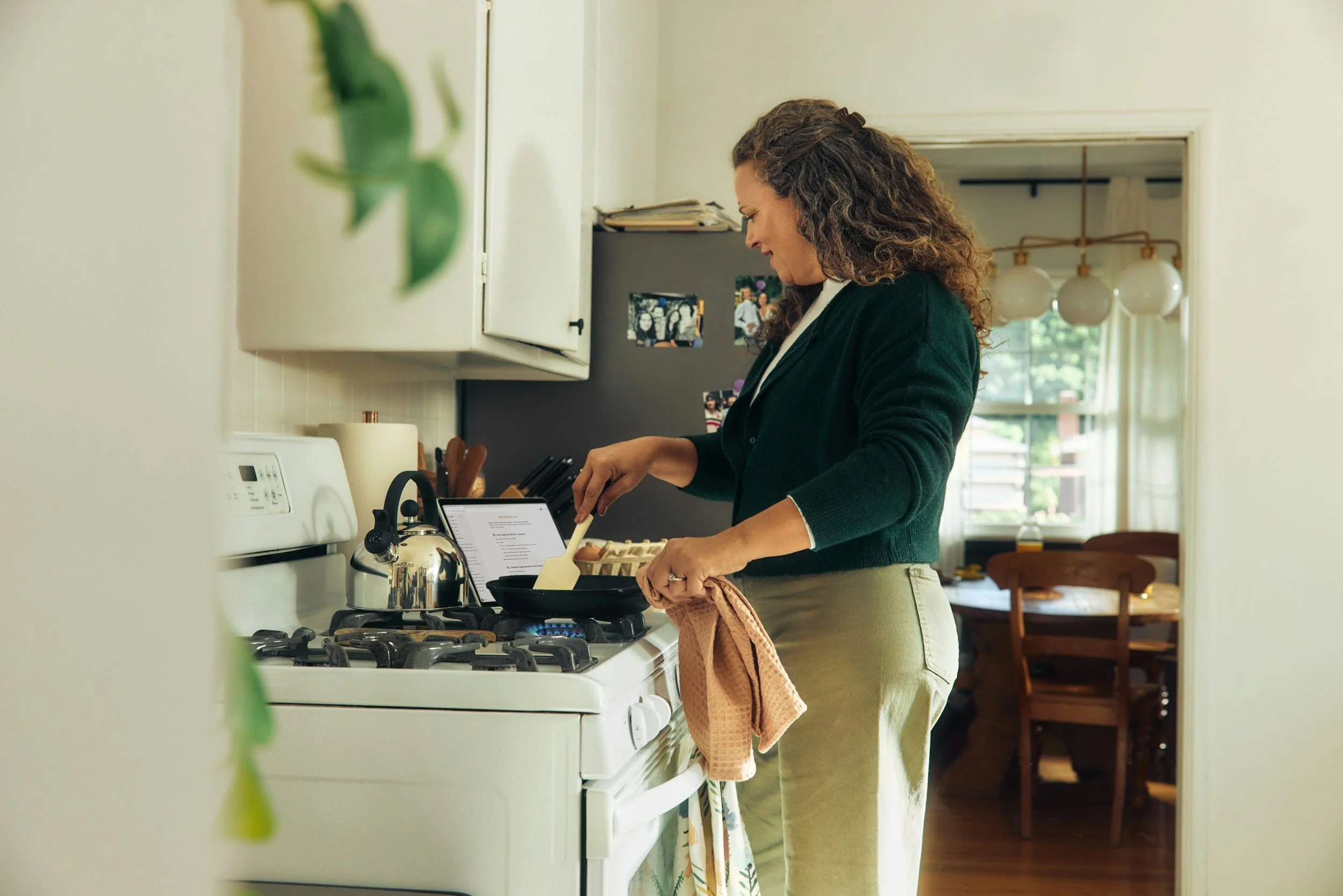
“It’s not the big decisions that exhaust you. It’s the constant stream of small ones that never stop.”
Feeling Mentally Exhausted? 5 Simple Ways to Reduce Decision Fatigue
"It's rarely the big decisions that exhaust us.
It's the thousands of tiny ones nobody else ever sees."
For a long time, I thought I was simply tired.
Not unusually tired.
Just life tired.
The kind of tired that comes with work, children, responsibilities and a calendar that always seemed just a little too full.
But there was another kind of exhaustion sitting quietly underneath it.
My mind never seemed to switch off.
Even when I wasn't doing anything, I was thinking.
What needs to happen tomorrow?
Have I replied to that email?
What are we having for dinner?
Did I book that appointment?
What am I forgetting?
The questions never stopped.
And the strange thing was...
None of them felt particularly important on their own.
But together they created a constant stream of decisions that quietly consumed my attention.
I wasn't simply busy.
I was mentally carrying too much.
The Mental Load We Rarely Talk About
Most of us imagine decisions as the big moments in life.
Changing careers.
Moving house.
Choosing schools.
Those decisions are exhausting.
But they don't happen every day.
The decisions that slowly wear us down are much smaller.
Should I cook tonight or order takeaway?
What needs to go in the lunchboxes tomorrow?
Can I fit one more thing into this week?
Should I answer that message now or later?
Do we have enough milk?
Did I remember to pay that bill?
None of these thoughts stay with us for very long.
But together they create something psychologists call decision fatigue—the gradual depletion of our mental capacity after making repeated choices throughout the day.
By late afternoon, even deciding what to cook can feel overwhelming.
Not because dinner is difficult.
Because your brain has been making decisions since the moment you opened your eyes.
That's not laziness.
It's cognitive overload.
And once I understood that, I stopped blaming myself for feeling exhausted by ordinary life.
What I Started Doing Differently
Once I understood what decision fatigue actually was, I stopped trying to become more organised.
Instead, I started looking for ways to give my mind fewer things to carry.
Not because my life became quieter.
Because I realised my brain didn't need to make every decision in real time.
I stopped deciding dinner at 5 o'clock
For years, dinner was a daily debate with myself.
What do we have?
Do we have the ingredients?
Will everyone eat it?
Do I have the energy to cook?
By the time I finally decided, I already felt exhausted.
Now I spend ten minutes at the beginning of the week choosing a few simple meals.
Nothing elaborate.
Nothing Pinterest-worthy.
Just enough to remove one decision from the busiest part of the day.
When evening arrives, I don't have to think.
I simply cook what I've already chosen.
It's a small change.
But small changes repeated every day create surprising relief.
I stopped expecting my brain to remember everything
For years I wore my mental load almost like a badge of honour.
I remembered birthdays.
Appointments.
Shopping lists.
School forms.
Things to buy.
Emails to send.
Until I realised I wasn't being organised.
I was using my brain as a storage unit.
Now I write things down.
Not because I might forget.
Because my mind deserves somewhere to rest.
I gave myself permission to repeat what works
For a long time I thought life should always feel fresh.
Different meals.
Different outfits.
Different routines.
Now I've realised repetition isn't boring.
It's calming.
There are meals my family loves.
Clothes I always feel good wearing.
Simple routines that make mornings easier.
Choosing them again isn't a lack of creativity.
It's one less decision my brain has to make.
I started making decisions before I needed them
One of the biggest shifts was learning to decide things while I still had energy.
What I'll wear tomorrow.
What we'll eat.
When I'll work.
What matters most this week.
Making those choices ahead of time means my future self doesn't have to keep starting from zero.
It feels less like controlling my life...
...and more like caring for it.
I stopped believing every decision deserved equal attention
Not everything needs deep thought.
Some decisions matter enormously.
Most don't.
I've learned to save my energy for the choices that actually shape my life.
The conversations that matter.
The boundaries that protect my peace.
The dreams I still want to pursue.
The people I love.
Those are the decisions that deserve my best thinking.
Not what to cook on a Tuesday night.
The Quiet Gift of Simplicity
One of the unexpected things I've discovered is that simplicity creates space.
Not empty space.
Mental space.
The kind that lets you notice your own thoughts again.
When your mind isn't constantly occupied with tiny decisions, something else becomes possible.
Creativity.
Presence.
Curiosity.
You remember things you actually wanted to do.
You notice beauty more easily.
You laugh more.
You stop feeling as though your entire day is one long reaction to everyone else's needs.
Nothing dramatic changes.
But life begins to feel lighter.
And sometimes, that's exactly where change begins.
You Don't Need to Make Better Decisions
For a long time, I thought the answer was becoming more organised.
Finding the perfect planner.
Creating better routines.
Managing my time more efficiently.
Some of those things helped.
But they didn't solve the real problem.
The problem wasn't that I was making bad decisions.
It was that I was making too many of them.
Every decision asks something of us.
On its own, that cost is almost invisible.
But repeated hundreds of times a day, it quietly leaves us mentally depleted.
I don't think the goal is to eliminate decisions.
The goal is to protect your attention for the things that truly deserve it.
Your relationships.
Your creativity.
Your wellbeing.
The conversations that matter.
The life you're trying to create.
Those are the places where your best thinking belongs.
Not deciding what's for dinner for the seventh time this week.
A Small Place to Begin
If this feels familiar, don't try to change everything at once.
Choose one area of your life where you make the same decision every day.
Meals.
Clothes.
School lunches.
Your grocery shop.
Whatever comes to mind first.
Ask yourself:
"What could I decide once instead of deciding every day?"
Start there.
Not because it's life-changing on its own.
Because every small decision you remove creates a little more space.
And space is often what we're really craving.
Space to think.
Space to notice.
Space to breathe.
Space to hear yourself again.
With love,
Olga
Begin Your Return
If something in this article resonated with you, I'd love to invite you to The Return—a gentle, free 5-day reset created to help you reconnect with yourself through small, thoughtful daily practices.
No pressure.
No perfection.
Just a quiet place to begin again.

If You're Ready to Go Deeper
If you'd like to continue exploring these ideas, I also created the Blooming Back to Me Prompt Journal.
Fifty-two weeks of thoughtful prompts to help you slow down, reflect, and come back to yourself—one page at a time.
No pressure.
No perfection.
Just one quiet conversation with yourself each week.
Things I Keep Coming Back To
If you're curious about the books, skincare, home rituals and everyday things I genuinely use and love, I've gathered them all in one place.
They're not essentials.
Just small things that have quietly earned a place in my life and make ordinary days feel a little calmer, a little more intentional, and a little more like mine.
